

Recognize The Sympotoms and Risk to Prevent Heat Stroke on the Jobsite
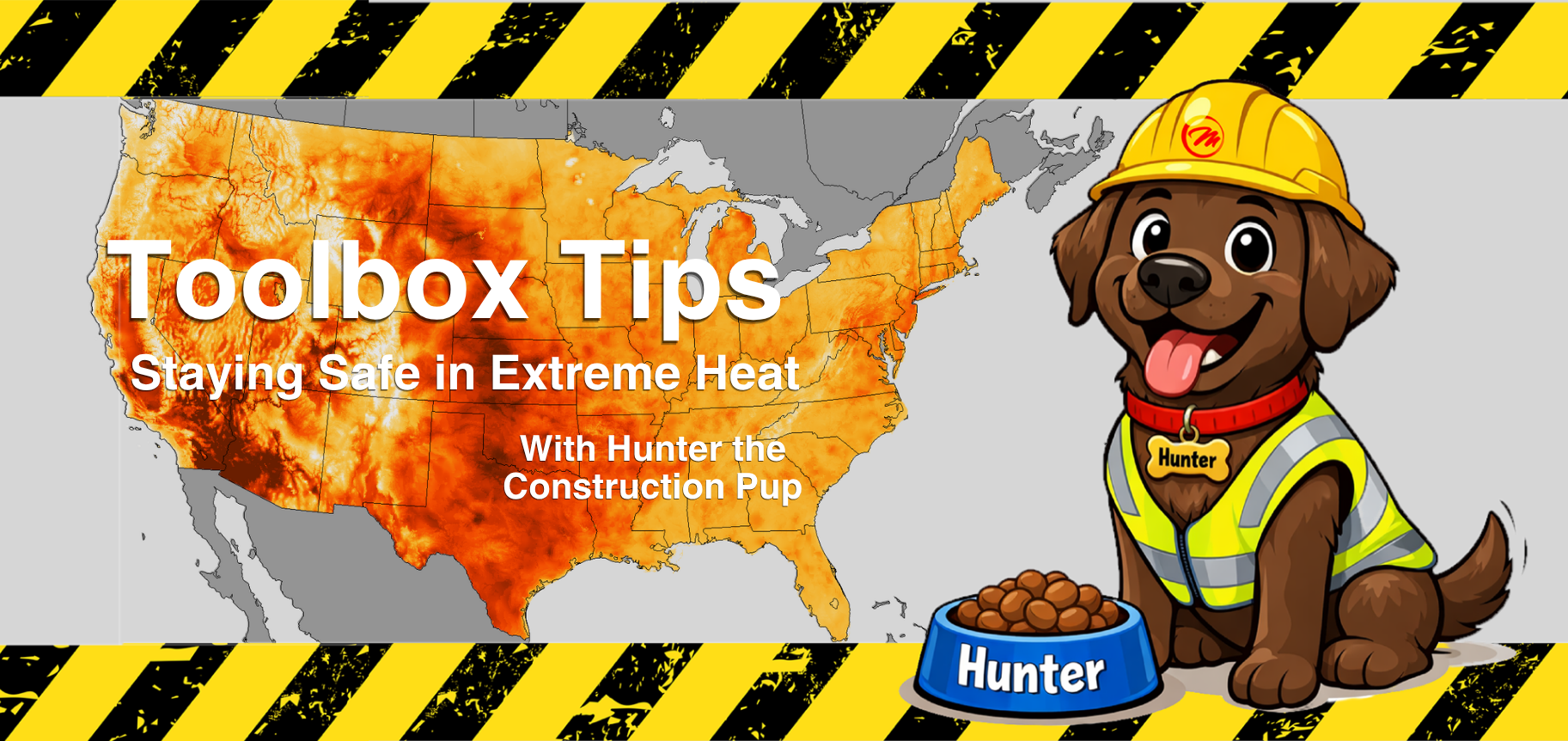
Why It Matters
Working in extreme heat can quickly lead to serious illnesses such as heat cramps, heat exhaustion, and heat stroke. Heat stroke is a medical emergency and can be fatal if not treated immediately.
Know the Risk Factors
- High temperatures and humidity
- Direct sunlight
- Heavy physical labor
- Wearing PPE or heavy clothing
- Not drinking enough water
- New employees or those not acclimated to the heat
Preventing Heat Illness
- Hydrate: Drink water every 15–20 minutes, even if you are not thirsty. Avoid energy drinks and excessive caffeine.
- Take Breaks: Rest in shaded or air-conditioned areas as needed.
- Dress Appropriately: Wear lightweight, light-colored clothing whenever your PPE requirements allow.
- Acclimate: Increase workload gradually over the first 7–14 days when returning to hot conditions.
- Use the Buddy System: Watch your coworkers for signs of heat illness.
Recognize the Symptoms
Heat Cramps
- Muscle cramps or spasms
- Heavy sweating
Heat Exhaustion
- Heavy sweating
- Weakness or fatigue
- Dizziness
- Headache
- Nausea or vomiting
- Cool, pale, clammy skin
Heat Stroke (Medical Emergency)
- Body temperature above 104°F
- Hot, red skin (may be dry or sweaty)
- Confusion or slurred speech
- Loss of consciousness
- Seizures
What to Do
If someone has heat exhaustion:
- Move them to a cool or shaded area.
- Loosen or remove excess clothing.
- Give cool water if they are alert.
- Apply cool, wet towels or ice packs.
- Stay with them and monitor their condition.
If someone shows signs of heat stroke:
- Call 911 immediately.
- Move them to a cool area.
- Cool them rapidly using ice packs, cold water, or wet towels.
- Do not give fluids if they are unconscious or confused.
- Stay with them until emergency responders arrive.

Building a Better Construction Industry Starts with Better Teams
Beyond the Bid: Why Predictability Is Becoming the Most Valuable Asset in Construction
A blog post on the importance of using drywall stabilizing clips on the construction sites for Construction Safety Week 2026.
The Skilled Labor Shortage in the United States: Why It Matters More Than Ever By: Milena Tarpley
Building Better Together: Reflections from Our First Annual Company Meeting By: Zak Semens

Examines the use of the term subcontractor vs trade partner and the impact it has on the construction industry.